Choosing a Linux Distro: Server Edition
- Scott Tansowny
- Linux distributions , Home server
- January 13, 2026
Updated March 14, 2026
So, you’ve decided to build a home server—a reliable, always-on machine for file storage, media streaming, hosting services, or running containers. Choosing which distro to use can be a difficult decision with so many options, each with its own set of advantages and trade-offs.
I’ve run Linux servers for many years, from old repurposed laptops to dedicated server hardware. My servers consistently run on Alpine Linux for its unbeatable stability and strong security model, but that’s just one path among many. This guide draws on that hands-on experience to help you select the best distro for your specific server needs.

Table of Contents
Key Server Considerations
Choosing a server distro is different from picking a desktop OS, here are some crucial factors to consider:
Stability & Predictability
Your server should run for months or years without hiccups. You want a distro with a proven track record where updates fix security issues without introducing breaking changes. A “set it and forget it” mentality is often the goal.
Security
Servers are prime targets for hackers and malicious actors. Consider the distro’s default security configuration (firewalls, minimal installs, Linux security modules), the speed of security patches, the long-term support (LTS) commitment, and how easy it is to automate and audit updates.
Resource Efficiency & Overhead
A lightweight distro leaves more RAM and CPU cycles for your actual applications (Jellyfin, Nextcloud, Immich, etc.). This is especially important if you are using older or recycled hardware in your setup.
Philosophy & Support Model
Is it backed by a corporation with paid enterprise support or a dedicated community? This influences development priorities, support length, and available documentation.
The Distributions
Following are my top picks for distros for a home server starting with my personal pick of Alpine Linux and listing the rest from best for beginners to most advanced.
Alpine Linux

Founded: Norway (2005)
Based on: independent
Init system: OpenRC
Backed by: community
Release cycle: fixed release, 6 months
Support: 2 years
Homepage: https://www.alpinelinux.org/
Difficulty level: 🔵 🔵 🔵 🔵 🔵 (expert)
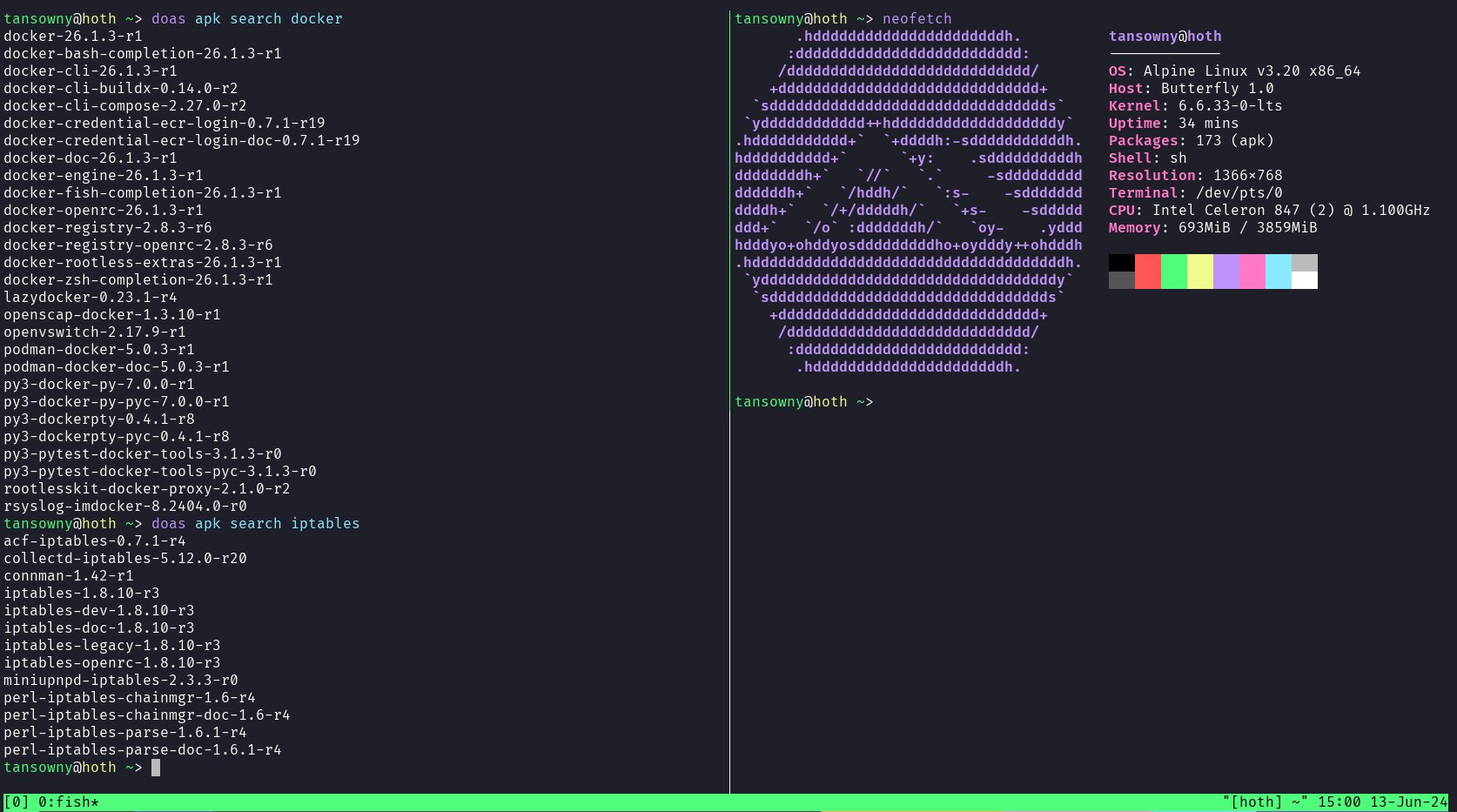
Alpine Linux is a small, simple, and secure server distro designed from the ground up to be stable and have an extremely small attack surface. It’s my personal choice for every server I run.
The air’s light up here!
Alpine is engineered to be a small, efficient base to build off of, making it an extremely lightweight and performant distribution. In fact, it’s the lightest distro on this list with an unbelievably small footprint. BusyBox instead of GNU Coreutils, musl libc instead of glibc, doas instead of sudo—decisions like this allow this distro to run extremely fast. This also makes it extremely secure. With a very small codebase, there are inherently fewer security flaws and possible exploits. Security through simplicity.
Get your hands dirty
Alpine’s minimalism means you really need to configure a lot of stuff manually. Things that just work on many other server distributions, require a lot more setup and configuring on Alpine. Also, because Alpine uses OpenRC instead of systemd, many online tutorials and documentation won’t apply directly. That said, the Alpine Wiki is excellent, and once configured, an Alpine server can run for years with minimal maintenance.
APK: a package manager that gets out of the way
Alpine’s package manager, apk, is deliberately simple and fast. It handles dependencies cleanly, keeps the package database small, and makes updates quick. The official repositories are modest in size compared to some other distros, but they cover most server essentials —and for anything beyond that, Alpine works beautifully with Docker or Podman, where you can run virtually any software in a container without bloating the base system.
If you’re looking for the ultimate in simplicity and security and have some Linux experience, Alpine Linux is definitely worth a look.
Pros
- Small, simple, and secure, only giving you what you need
- Well thought out package and service management
- Works well with popular server software such as Docker
- Versatile
Cons
- Not as much help/documentation available compared to more popular server distros
- Smaller repository of packages than some other distros
- More manual setup required
Ubuntu Server

Founded: Isle of Man (2004)
Based on: Debian
Init system: systemd
Backed by: corporation (Canonical)
Release cycle: fixed release; 2 years (LTS version), 6 months (interim releases)
Support: 5 years (LTS versions), 9 months (interim releases), 10 years (with pro subscription)
Homepage: https://ubuntu.com
Difficulty Level: 🔵 🔵 ⚪ ⚪ ⚪ (beginner-friendly)
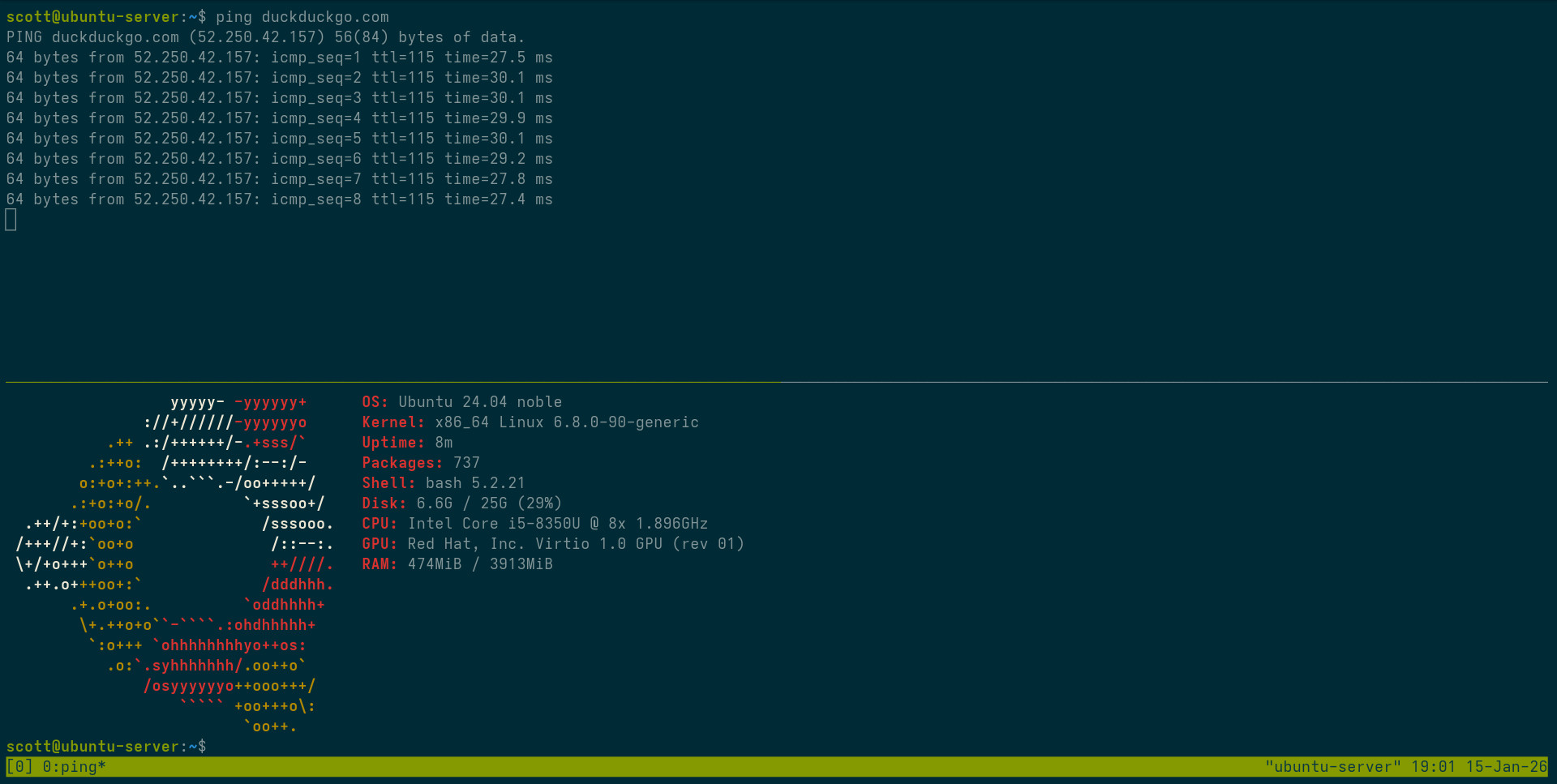
Ubuntu Server is the enterprise-ready Linux distribution that combines the reliability of Debian with commercial support and cutting-edge features, making it a popular choice for both home and professional server environments.
Enterprise-grade with community roots
Ubuntu Server leverages Debian’s robust foundation while adding its own layer of polish and commercial support. Developed by Canonical, it strikes a balance between stability and modern features. The Long-Term Support (LTS) releases provide a stable platform for home server enthusiasts who want a reliable, well-supported platform without constant maintenance and the interim releases provide quicker access to new and exciting software and features.
Ease of use meets powerful capabilities
What sets Ubuntu Server apart is its exceptional user-friendliness. Unlike the manual configuration found on other distros, Ubuntu provides intuitive tools and extensive documentation that make server setup and management more accessible. Right from installation, Ubuntu provides simple installs for a lot of popular server software such as Nextcloud using its Snap platform.
Comprehensive ecosystem
Ubuntu has an enormous software repository and excellent container support. Its integration with modern technologies like Snap and Docker make it versatile for various server use cases. The built-in support for cloud technologies means you can easily transition your home server skills to professional cloud environments.
There is a reason so many people run Ubuntu and you won’t go wrong if you choose this distribution.
Pros
- Very user-friendly
- Commercial support options
- Extensive software repository
- Excellent documentation
Cons
- Slightly higher resource usage
- Some advanced features may require paid Ubuntu Pro subscription
- Corporate-driven development may not always align with community interests
Debian

Founded: United States (1993)
Based on: independent
Init system: systemd
Backed by: community
Release cycle: fixed release; two years
Support: 5 years
Homepage: https://www.debian.org
Difficulty level: 🔵 🔵 🔵 ⚪ ⚪ (intermediate)
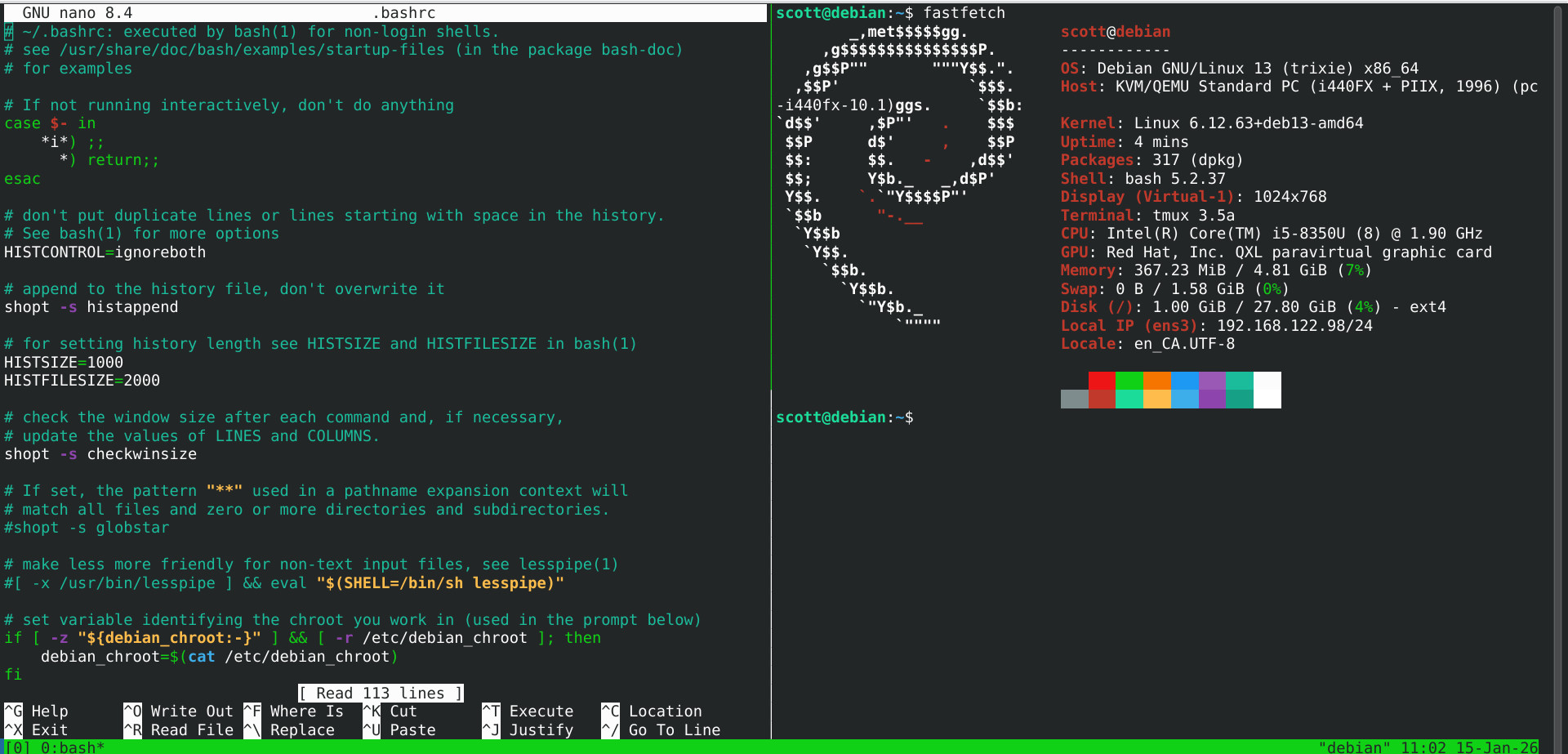
Debian is a cornerstone of server infrastructure, powering critical systems worldwide from small businesses to large-scale enterprise environments. Its reputation for stability makes it a top choice for servers that require minimal downtime and maximum reliability.
Rock solid stability
Debian is renowned for its unparalleled stability. The development philosophy prioritizes security and critical bug fixes over introducing new features, making it ideal for production environments. Debian provides a consistent, predictable platform that can run for years without requiring major system changes. Each version receives 5 years of updates, allowing system administrators to plan upgrades carefully and maintain a stable infrastructure.
Measured and secure
The measured approach to package updates means that while you won’t get the latest software features, you get thoroughly tested, secure packages. While this might mean slightly older software versions, it ensures maximum stability. In regard to security, Debian is quick to apply security patches to the older software in the event of any security vulnerabilities. For cutting-edge features, administrators can use backports or containerization technologies like Docker or Snaps to run more recent software versions.
The universal server platform
Debian truly lives up to its “universal operating system” motto in server environments. It supports a wide range of architectures, from ARM-based systems like the Raspberry Pi to enterprise-grade x86 servers and cloud instances.
Debian has some challenges but remains one of the most respected server platforms in the Linux ecosystem.
Pros
- Exceptional stability and security
- Large software repository
- Supports wide range of server architectures
- Community-driven development
Cons
- Steeper learning curve for new administrators
- Measured software versions
Note: Red Hat Enterprise Linux (RHEL) is one of the most used enterprise Linux distributions. It is, however, a paid distribution that has had some questionable choices in regard to open-source (although it does contribute significantly to open-source software). Because of this I have excluded it from the list but included below AlmaLinux (a distro that is binary compatible with RHEL) and Fedora (a community driven distro upstream of RHEL).
AlmaLinux

Founded: United States (2021)
Based on: RHEL
Init system: systemd
Backed by: community
Release Cycle: Fixed, ~3 years (following RHEL)
Support: 10 years
Homepage: https://almalinux.org/
Difficulty Level: 🔵 🔵 🔵 ⚪ ⚪ (intermediate)
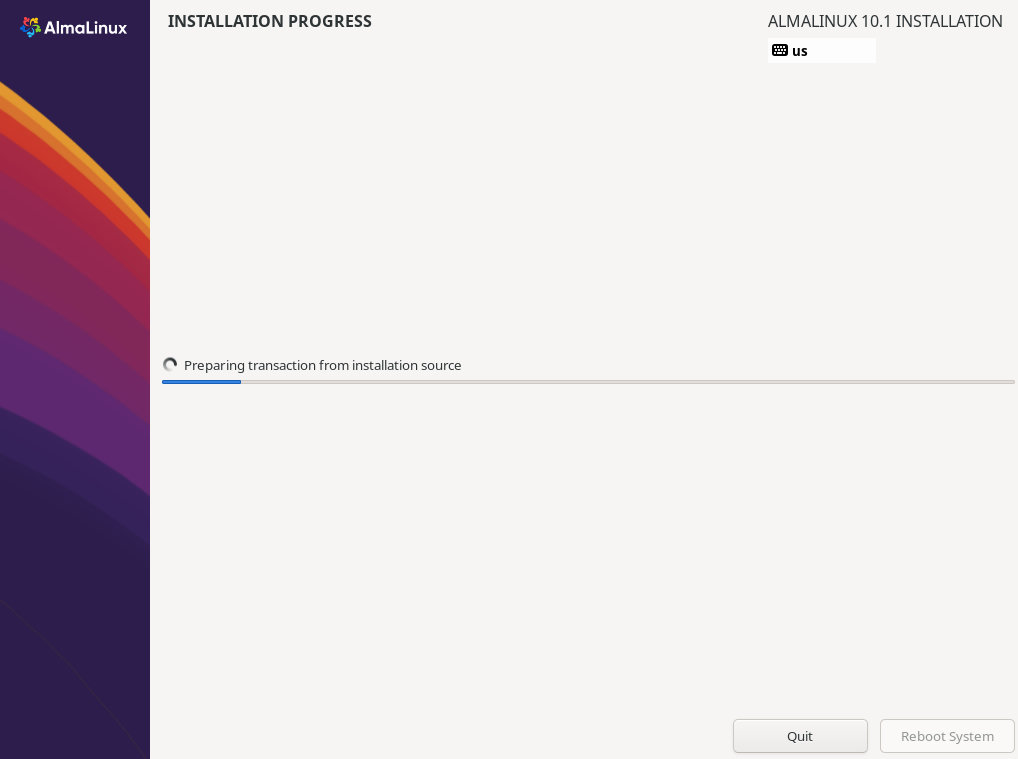
AlmaLinux is a 1:1 binary-compatible rebuild of Red Hat Enterprise Linux (RHEL) meaning software that runs on RHEL will work flawlessly on AlmaLinux. It offers the rock-solid stability and decade-long support of the world’s leading enterprise Linux platform, without the cost.
Enterprise stability, community distro
You get the exact same stability, security patches, and incredibly long life cycle (10 years) as RHEL. The software is mature, heavily tested, and backed by Red Hat’s extensive development process. It’s a great server platform to install once and leave for years.
Transferrable skills
The RHEL ecosystem uses the reliable dnf package manager and RPM format. If you work in enterprise IT, managing an AlmaLinux server at home reinforces the exact same skills used professionally. Security-Enhanced Linux (SELinux), a security module that enforces access control policies to manage how processes interact with your system, is enabled and configured by default.
The “stable” trade-off
With AlmaLinux, like other stable distros, you get older software versions; the focus is on backporting security fixes, not new features. Adding newer software often requires using third-party repositories or containers such as Docker or Podman.
If you want maximum stability, a 10-year support cycle, and/or want to develop skills directly transferable to the enterprise RHEL ecosystem, give AlmaLinux a try.
Pros
- Long 10-year support lifecycle
- Rock-solid enterprise-grade stability
- Direct skill transfer to corporate Linux (RHEL)
- Strong security with SELinux by default
Cons
- Very measured software versions
- Less home-user-focused documentation
- Some desktop/media-focused packages may be absent
Fedora Server

Founded: United States (2003)
Based on: independent
Init system: systemd
Backed by: corporation (Red Hat)
Release cycle: fixed release; approximately 6 months
Support: 13 months
Homepage: https://fedoraproject.org
Difficulty level: 🔵 🔵 🔵 🔵 ⚪ (advanced)
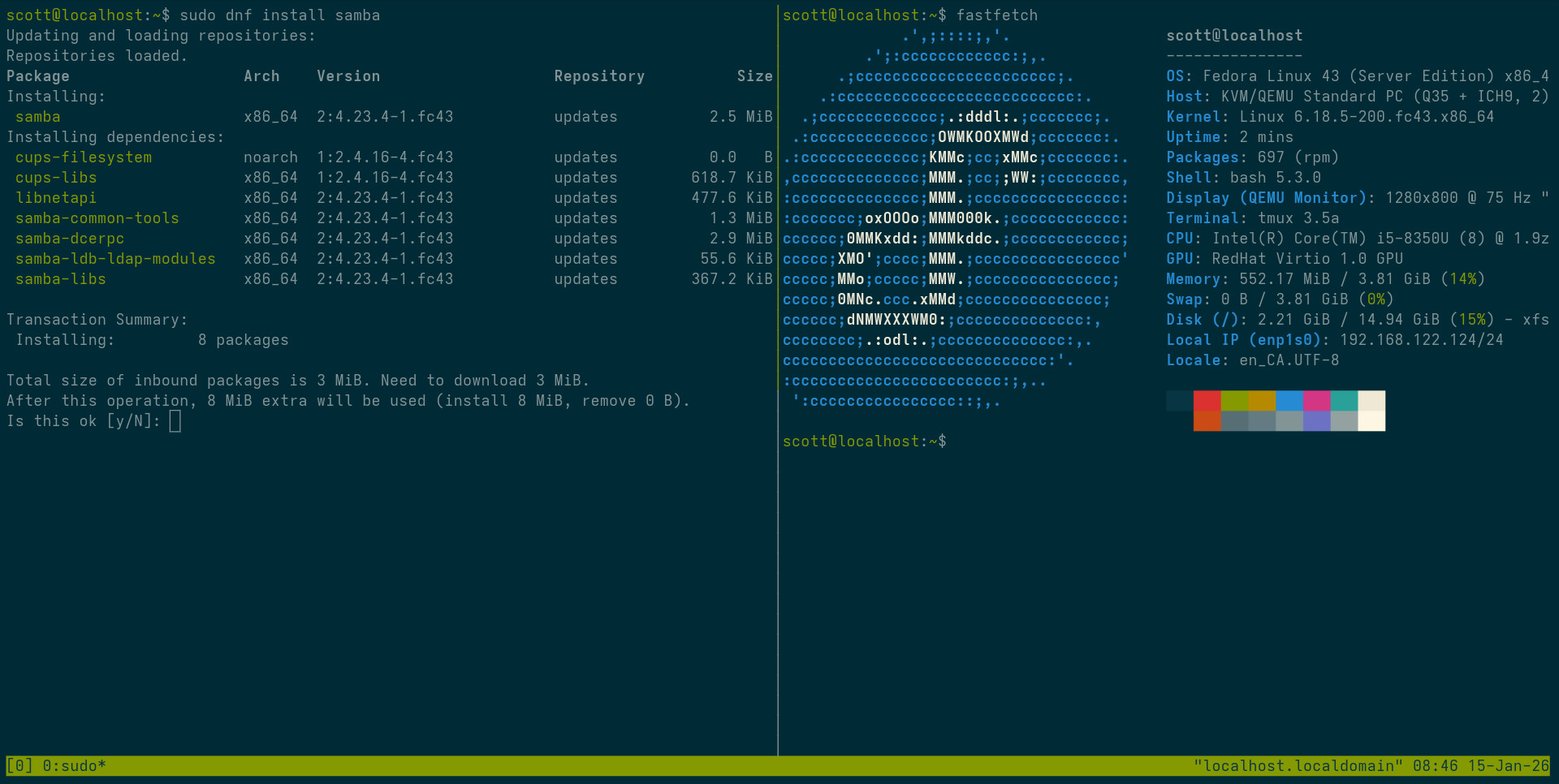
Fedora Server is where Red Hat innovates. It features the latest stable versions of open-source server technologies, offering a shorter, more dynamic cycle than its enterprise descendants.
Leading edge software
Fedora Server provides a curated selection of the latest server software—think the newest versions of Docker, Podman, Hugo, or Node.js—within a coherent, well-tested system. It’s the ideal platform for learning and using modern open-source technologies as they emerge.
Cockpit web console
A standout feature is Cockpit, a well-executed web-based administrative interface. It makes managing services, storage, networking, and updates intuitive from a browser. It’s lightweight and excellent for home server admins who prefer a GUI for basic tasks without needing to always use the CLI.
A look at the future
Fedora is the upstream proving ground for RHEL. Using it gives you a firsthand look at the future of the enterprise Linux ecosystem. The integrated SELinux policy is also excellent and more up-to-date than on stable distros.
The update cycle
The 13-month support cycle means you must update to new releases every year. This is more frequent than other options, but the upgrade process is generally smooth and well-documented.
If you’re a tech-enthusiast admin who wants the latest server software in a stable package, love modern tools like Podman and Cockpit, and don’t mind a more regular upgrade cadence, Fedora Server may be for you.
Pros
- Latest, well-integrated open-source server software
- Excellent Cockpit web management interface
- Strong container/Podman support and SELinux policies
- Direct path to see future RHEL features
Cons
- Shorter support cycle requires regular upgrades
- Less stable than fixed LTS releases
Final Recommendation
For most new users, start with Ubuntu Server. Its balance of stability, support length, and incredible resources makes it a great choice.
For the ultimate in stability and longevity, choose Debian or AlmaLinux.
For a cutting-edge, container-focused setup, choose Fedora Server or Alpine Linux.
Remember, the best distro is the one you can manage effectively, you can run virtually any server software on any of these. Choose one, put some time into learning it, and have fun with your server!
Want a Hand With Your Setup?
Choosing a distro is step one—getting everything running smoothly and keeping it that way is another story. I help people build, secure, and maintain Linux systems that are private, sustainable, and truly their own.
Take a look at my support plans →
This post is part of a series on Choosing a Linux Distro: